Welcome!!!!!!!!

Welcome to my blog! This is an academic place where I post my personal thoughts, opinions, and whatever else I see fit pertaining to the course AP World History Lab 9 at John Jay High School. I hope you will read my postings, vote in my polls, use the links I provide, and utilize and enjoy all the elements of my blog.

Enjoy!!!!!!!!!!!!

Thursday, February 21, 2008

Class Reflection: Response to thesis


In response to the following thesis:
"Large conversions only took place when powerful political, social, or economic incentives encouraged it and even then it led universally to syncretism rather than outright adoption of foreign cultural tradition"
I think that this thesis is valid in almost all circumstances. People don't convert to a new religion on a whim. Religion is a major part of the lives of people who practice it, and they will not convert unless they are offered a good reason to. This reason could be political, such as the adoption of a religion by a leader. It could be social, such as the equality which Buddhism offered to Chinese women. It also could be economic. The part which I am not sure about is the word "universally" in the second half of the statement. While I am sure that it ALMOST always led to syncretism, the are exceptions to ALL generalizations about history. There have almost certainly been times in history in which there has been outright adoptions of foreign beliefs. During the rapid spread of Islamic faiths there were times when peoples completely adopted the Islamic customs. In most cases however we find syncretism. Certainly with the conversions of Europeans to Christianity we see the adoption by the faith of Pagan holidays and traditions. With Buddhism's spread into China many Confucian ideals were adopted, as well as with the "greater vehicle" (Mahayana) the transformation into a more acceptable religion. Judiasm was a faith that had very little conversion. As a result, the religion changed very little over time. This thesis provides a strong basis for understanding the spread of religions.


Tuesday, February 12, 2008

Class Reflection: Jesus and Buddah

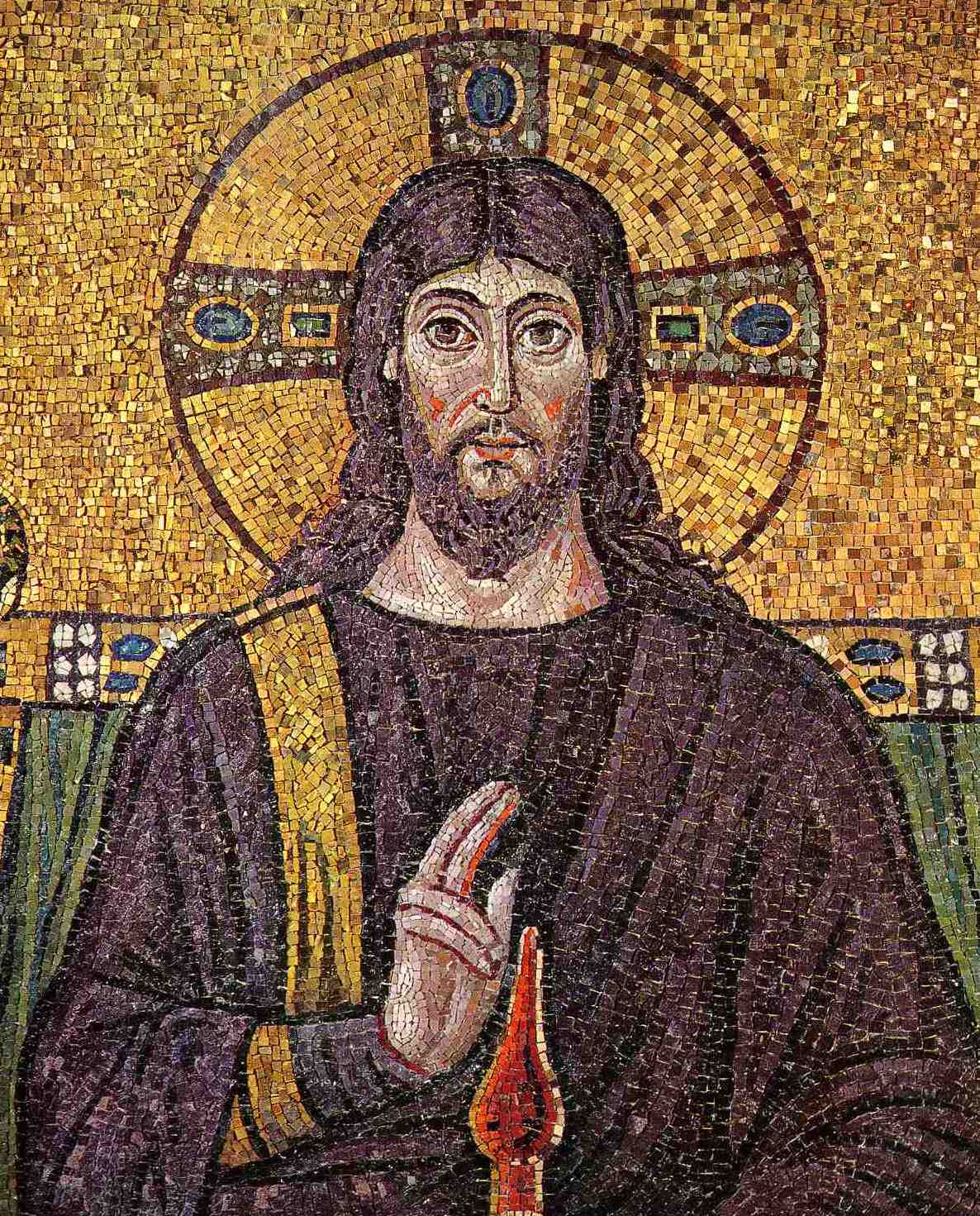
While the figures of Jesus and Siddhārtha Gautama may seem vastly separated, the ideas they preached shared much in common, as shown by the activity in class today. It is not so surprising when one analyzes things. They were of course separated by half of a Millennium, and several thousand miles, but there situations were similar. Both searched for a reformed alternative path from the established religion, while embracing some of its earlier principles. For Buddha, this was Hinduism; For Jesus, it was Judaism. Both appealed to the lower levels of society by preaching a sort of spiritual equality. While these religions developed vastly separated, the circumstance surrounding them were similar.

Saturday, February 9, 2008

Class Reflection

It has been a while since I have posted. In that time we have transitioned into a our third term. We have not looked at any new societies in this time, but have instead focused on learning a new essay format, DBQ. We worked first with a football example, familiarizing ourselves with the format. We then moved on to our first real essay, which we handed in just this week, on women's roles in China.

I like this new essay format. It is a nice change of pace. Everything you need is provided. The compare and contrast format was becoming repetitive, constricting, tedious, and monotonous. I also enjoy the primary source work.

Just very recently we have begun to look at the Bantu migrations. This is my first venture into African history, and I hope it will be a great learning experience.

Wednesday, January 16, 2008

Class Reflection

Addressing the last several classes:
These classes were pretty low key. Not much that I found worthy of refelection. I'll make a note of them here anyway.

January 15: We got back assessments today. Not much to reflect on.

January 11: Assessment today on Mauryan and Gupta

January 9: Mrs. Daley was absent today. We did a venn-diagram as prep for the Rome & Han Essay

Thursday, January 10, 2008

Is Geography Destiny?, Part 2


I was working on my essay and considering the massive influence of Confucianism on Han society, when it hit me:

A feature not related to geography impacting a society in a major way! Outrageous!

Is geography solely responsible for Confucianism, or it there more to destiny after all?

Monday, January 7, 2008

Class Reflection

Today's class was interesting. I was particularly interested by our current events discussion at the beginning of class. We should devote 5 minutes at the beginning of class once a week to current events, linking them when possible to the current curriculum.

Sunday, January 6, 2008

Class Reflection

Not much to report. We got back assessments today.

Thursday, December 20, 2007

Slavery In Rome And China


Slavery was more important to Rome than China. This arises from the fact that Romans were constantly and rapidly conquering new territories, and slaves continued to flood in. This surplus of slaves lead them to be very cheap, cheaper than peasant labor, and therefore slaves were adopted as the major workers of the Roman economy. In China however, they were isolated, and there was little new territorial acquisitions from which slaves could be acquired. This lead to a lower number of slaves, making them more expensive and therefore less of a part of the economy. Slaves were treated harsher in Rome because they were so cheap and abundant that they were viewed as disposable. In China, where they were rarer and more expensive, they were viewed as more valuable and hence treated with greater caution.

Class Reflection

Interesting class. I may have gotten a little bit carried away with the whole democracy thing. I still am not convinced about the Republic being a democracy. Democracy is government by the people. In the Roman Republic, only members of an elite aristocracy could hold governmental posts. Therefore, the government is not by the people, but by the members of the aristocracy.

Monday, December 17, 2007

Class Reflection

Todays test was fair, despite the time restrictions. I think that being allowed to do the paragraph at home will be beneficial. Not much else about todays test that I can reveal.

Sunday, December 16, 2007

Ancient Greece Exam

I am considering several topics for my compare-contrast paragraph:

  • Gender Roles
  • Political Structure
  • Economics
  • Religion
  • Philosophy
  • Artistic
I think the multiple choice section will be fairly easy. We have read the textbook sections on Greece fairly recently, and it will probably remain fresh in our minds.

Thursday, December 13, 2007

Class Reflection

Mrs. Daley was absent for today's class (jury duty?). We began work on the Stearns book's section of Hellenism in India.

Tuesday, December 11, 2007

Class Reflection


I thought today's class discussion was quite perceptive. I find Aristotle's views, particularly those on gender roles, to be, while still patriarchal, much less extreme than those of Hinduism and Confucianism. I however met some disagreement in my group. If anyone has strong evidence to the contrary I would sincerely be intrigued in hearing it. I am beggining to feel the redundancy of our studies of Greece in Global Studies with those in AP World history lab. It is, I must say, quite frustrating.

Wednesday, December 5, 2007

Class Reflection

I thought today's video was quite interesting. What I found most shocking was the gender roles of Sparta. I had always thought of Sparta as the crude, barbaric, back-ward looking city-state, and Athens as the cultured, educated, and progressive city-state. Given these assumptions, I though for sure that Women would be treated much better in Athenian society than in Spartan. Alas, the opposite was surprisingly true as we saw in the video. I was also surprised similarly of the encouragement of Homosexual behavior by Sparta. In this case again, based on what I already knew about the two city-states, I expected that Athens would be much more accepting.

Monday, December 3, 2007

Is Geography Destiny?


Athens and Sparta were two civilizations that evolved in nearly identical geography. They were, however, radically different. If geography is the determining factor in destiny, how can this be so?

Friday, November 30, 2007

Greece in the Classical Period

Being intrigued by the "Egypt and The Middle East: Contact woth Eary Greece" article, I searched for some more resources about the classical development of Greece. I found several useful sites.

  • The second one that I discovered was a comprehensive history of Greek civilization. It included hundreds of links at the bottom of the page to all aspects of greek civilization.

For more links see my Classical Links section on the right panel of my blog.

Thursday, November 29, 2007

Egypt and the Middle East: Contact with Early Greece

I thought this was a perceptive article. Yet another work of Peter Stearns (see posting "Peter Stearns"). I wonder where our next unit will go? Based on this article, I guess that we will shift our focus from classical Eastern syncretism to look at classical western syncretism.

These are my responses to the questions:
(Note: Do not copy these responses. They are my own intellectual property.)

  1. Thesis Statement: “What is undeniable, however, is that several exchange points did exist during the heyday of the Middle East and Egypt, and that Greeks borrowed extensively but also combined influences with local features in novel ways-and all this well in advance of the rise of more characteristic Greek styles and institutions from about 800 BCE onward”

  2. The early societies of Greece, Egypt, and The Middle East had many interactions. These came in several forms. One major form of interaction was invasion. As one civilization invaded another, it brought with it cultural aspects that then diffused into local society. Another major form of interaction was trade. As merchants traveled with their goods they brought with them cultural aspects which would then diffuse. These factors of trade and invasion constitute the main interactions of these early civilizations.

  3. These societies were greatly impacted by the interactions outlined in #2. As societies interact, cultural diffusion occurs. The areas in which the societies were impacted are, as Stearn's stated, “writing, artistic styles, technology (including weaponry), and some religious elements.” Egyptian and Middle Eastern societies, through interactions and diffusion, helped to shape Greek culture. However, the process was syncretic, and many native elements remained influential. It was more borrowing and blending than wholesale adoption.

  4. The societies involved benefited greatly from these interactions. The direct benefits from trade are obviously the exchange of useful materials. The benefits of being invaded are less apparent. The main benefits come in the form of the cultural diffusion described in the previous response. The exchange of ideas is even more beneficial in the long run than the exchange of materials. The best aspects of both cultures can be picked out (through syncretic cultural diffusion) to make a more advanced culture overall.

Monday, November 26, 2007

Class Reflection

Today's class was interesting. Despite a small problem with some people not doing the region they were assigned to, we managed a productive discussion in our group. I remains a little confused about Korea's and Japan's belief systems? Were they Confucian? I also found trouble finding any fundamental differences between the syncretism in the three different regions. I am beginning to find our work on Buddhism's syncretism into China redundant. Does anyone else agree?

Friday, November 23, 2007

Tuesday's Class

I missed my second AP class in a row due to illness on Tuesday. I look forward to catching up at next Monday's class

Sunday, November 18, 2007

Collapse!: Lecture Series by Jared Diamond

A very interesting series of lectures by Jared Diamond, author of Guns, Germs. And Steel, on the collapse of civilizations:
  1. Part One
  2. Part Two
  3. Part Three
  4. Part Four

Global Studies Great Debates Unit

There is much question among students of AP world history as to what our focus will be in the class while Global Classes focus on debates. I have heard extreme claims that we will halt activities all-together so as not to get ahead of the Global Studies course. I doubt this severely. More likely we will take this time to focus in more on our overarching AP themes, or gender roles, or the AP essay and test format, or we may just continue plowing ahead. I wonder which direction we will take.

Friday, November 16, 2007

My Thoughts On History

In response to Marcus H.'s posting on history (see "why I like history" on his blog) :

I agree with Marcus. History is a fascinating subject to me. It is true, as Marcus says, that it is nearly impossible to be a responsible citizen without knowing history. This is because history, as you may recall the Stearn's article we read at the beginning of the year pointed out, provides the only lab in which we may find enough data to gain an accurate understanding of the actions, patterns, nature, evolution, thoughts, and essence of human beings.

Thursday, November 15, 2007

Peter Stearns


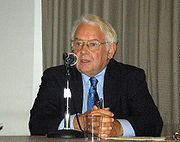
In the course we have been hearing a lot about a man named Peter Stearns (pictured above). We have read sections from his book on gender roles, he wrote the "Why Study History Article" that we read at the beginning of the year, and he is one of the authors of our "Documents In World History" books. I am sure I am not alone in wondering
"Who is this guy?"
I decided to find out. Follow this link to the wikipedia article on Peter Stearns. This was unfortunately the best source I could find, even considering its potential unreliability.

I'm Missing Friday's Class

I am going to be on a Design And Draw For Production field trip on Friday so I will unfortunately miss our class. Can anyone fill me in on what we covered. If anyone could help me out I would greatly appreciate it!

Wednesday, November 14, 2007

Welcome

I'm new to the blog. This should be cool. I prefer this to writing with pencil and paper. I have a feeling I will end up spending alot of time on this.